
Agricultural & Rural Architecture in Derbyshire, Staffordshire & Cheshire
How thoughtful rural architecture can unlock the potential of farms, barns and countryside land across the Midlands.

Across Derbyshire, Staffordshire and Cheshire, the countryside is shaped by a rich agricultural history. Farms, barns and rural outbuildings form a distinctive part of the landscape, yet many of these buildings are no longer required for modern farming. For landowners, this creates an opportunity, but also a challenge.
Agricultural buildings were never designed for residential living. They were built for storage, livestock or machinery, often with minimal insulation, basic structure and large open spans. Turning these buildings into homes or other uses requires careful architectural thinking as well as a clear planning strategy.
At Hawkstone Developments, much of our work focuses on rural sites. We regularly work with landowners to unlock the potential of barns, farmyards and agricultural land through carefully considered architectural design. The goal is always the same: to respect the rural setting while creating high-quality, contemporary spaces that work for modern life.
Rural architecture is different from typical residential design. In the countryside, new development must respond sensitively to landscape character, agricultural heritage and local planning policy. Successful schemes tend to balance modern living with traditional forms, materials and proportions that sit comfortably within their surroundings.
This is particularly important in counties like Derbyshire, Staffordshire and Cheshire, where planning authorities place strong emphasis on protecting the character of the countryside.
.avif)
One of the most common opportunities in rural areas is the conversion of existing agricultural buildings. Many barns are structurally capable of conversion, but each building presents its own constraints.
Under certain circumstances, planning routes such as Class Q permitted development allow agricultural buildings to be converted into residential homes. However, these rights come with strict requirements. The building must be structurally capable of conversion without significant rebuilding, and the design must remain broadly within the existing form.
Where Class Q is not suitable, a full planning application may provide a better route. This allows greater flexibility in terms of design, extensions or layout changes, but requires a stronger planning justification.
In both scenarios, early architectural input is essential. Understanding the structure of the building, the surrounding landscape and the local planning context can make the difference between a successful project and a refused application.
Beyond barn conversions, rural architecture can also include:
• Replacement farmhouses
• Contemporary countryside homes
• Agricultural diversification projects
• Holiday accommodation and rural tourism developments
• Estate buildings and ancillary structures
Each type of project requires a slightly different planning strategy, but all share the same principle: the design must enhance rather than compete with the rural landscape.
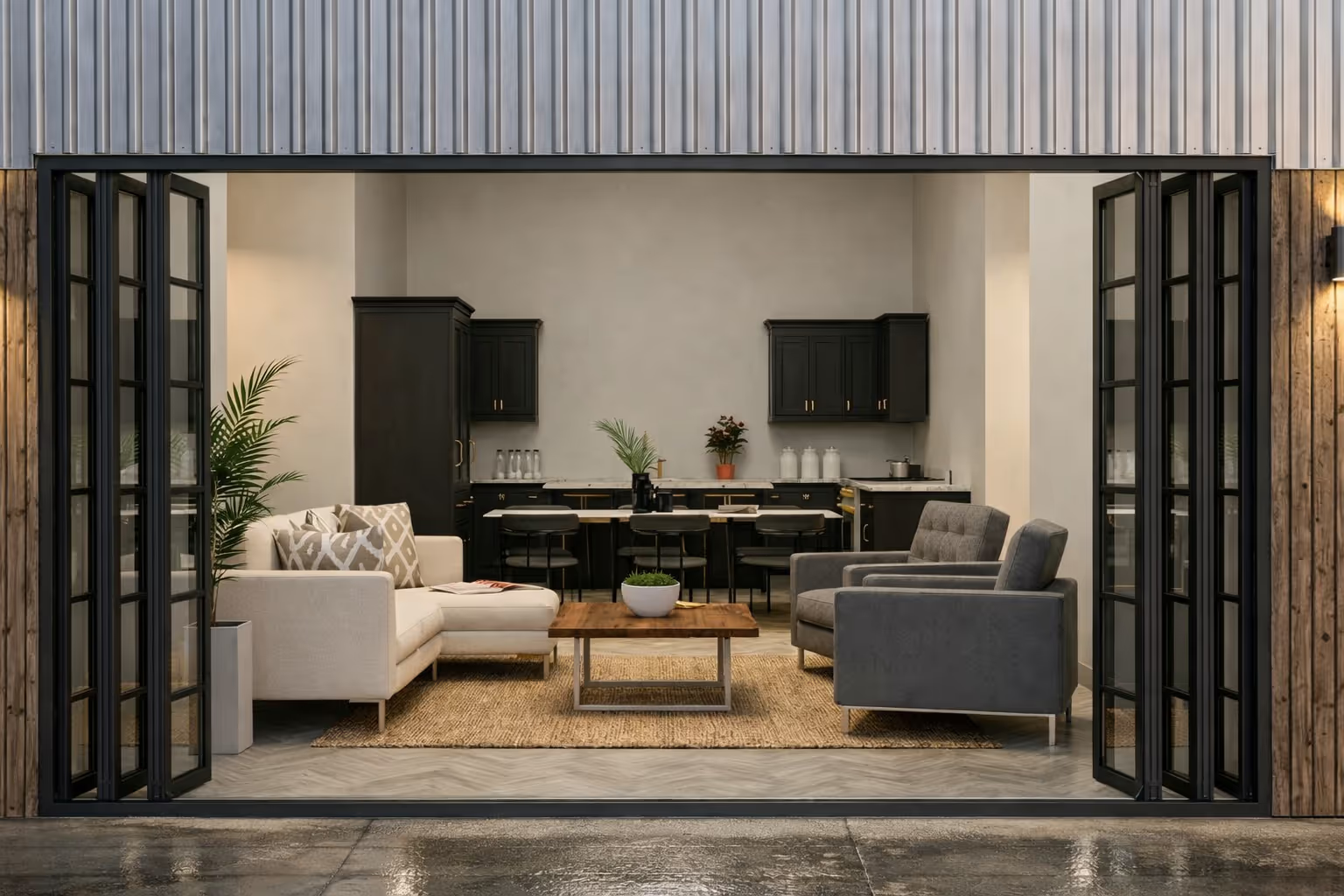
Design quality plays a major role in gaining planning approval in rural locations. Councils are often cautious about development in the countryside, particularly where new homes are proposed outside settlement boundaries.
However, well-designed schemes that respond to their setting can often gain support. Architecture that reflects agricultural forms, uses natural materials and integrates with the landscape is far more likely to succeed.
This is where experienced rural architects can add real value. A strong architectural concept, combined with a clear understanding of planning policy, can unlock opportunities that might otherwise be overlooked.
At Hawkstone Developments, we work closely with landowners, planners and consultants to guide rural projects from early feasibility through to planning approval and construction. Our approach focuses on creating buildings that feel rooted in their landscape while delivering the quality and comfort expected from a contemporary home.
For anyone considering developing agricultural land or converting a rural building in Derbyshire, Staffordshire or Cheshire, the first step is always understanding what is realistically possible.
If you would like to explore the potential of a rural site or agricultural building, our team would be happy to advise.
Client Success
We had a fantastic experience working with Hawkstone Developments. From the initial consultation to the final design, the team demonstrated outstanding professionalism, creativity, and attention to detail. They took the time to understand our vision and delivered a design that perfectly balanced aesthetics & function.
Duncan D
Barn Conversion
Hawkstone exceeded all our expectations! They designed our new home in Derbyshire with creativity and attention to detail we hadn't seen from other firms. The designs were stunning and perfectly suited to our needs.
Alex Corbitt
New Build home
Hawkstone did an excellent job delivering our new townhouse development. The team were professional, efficient, and highly knowledgeable throughout. They kept us well informed at every stage and ensured the final result met our expectations in every detail.
John Mayers
New Townhouses
I have worked with the chaps at Hawkstone several times now and their work ethic and professionalism shine through. They always work quickly and diligently whilst maintaining quality. They find solutions to problems and aren't shy to present new ideas. Highly recommended.
Rob Duckworth
Planning Consultant
Hawkstone did an excellent job planning my roof conversion. The team was professional, efficient, and highly knowledgeable. They kept me well-informed throughout the entire process, ensuring I was satisfied with every detail.
Adam Fox
Loft Conversion
Hawkstone did an excellent job planning my new house. The team was professional, efficient, and highly knowledgeable. They kept me well-informed throughout the entire process, ensuring I was satisfied with every detail.
Tony Adams
Full renovation & extension
Every project I've worked on with Hawkstone has been handled with a high level of professionalism and commitment. They work efficiently without compromising on quality, approach challenges with clear solutions, and confidently introduce new ideas. A team I would highly recommend.
Andrew Large
Planning Consultant