

What’s Happening to Planning Applications in 2026?
Across the UK, and particularly in areas such as Derbyshire, Staffordshire and the wider Midlands, planning applications have dropped significantly over the past 12–18 months.
Local planning authorities are seeing fewer submissions, especially for residential development, while determination periods are becoming longer and more unpredictable.
There are several key reasons behind this:
- Rising construction costs reducing viability
- Increased requirements such as Biodiversity Net Gain (BNG)
- Ongoing uncertainty around planning reform and policy changes
- Under-resourced local planning departments slowing decisions
As a result, many developers and landowners are choosing to delay submitting planning applications.
On the surface, this appears to be a challenging environment. In reality, it is creating a clear opportunity for those willing to act.
Why Fewer Planning Applications Creates Opportunity
When fewer planning applications are being submitted, competition reduces.
For sites in Derbyshire, Staffordshire and across the Midlands, this means:
- Less competition from competing schemes on similar sites
- Greater opportunity to position a proposal strategically
- Increased likelihood of standing out to planning officers
In stronger markets, planning departments are often dealing with a high volume of speculative applications. In quieter markets, well-considered schemes, supported by a clear planning strategy, are far more likely to gain traction.
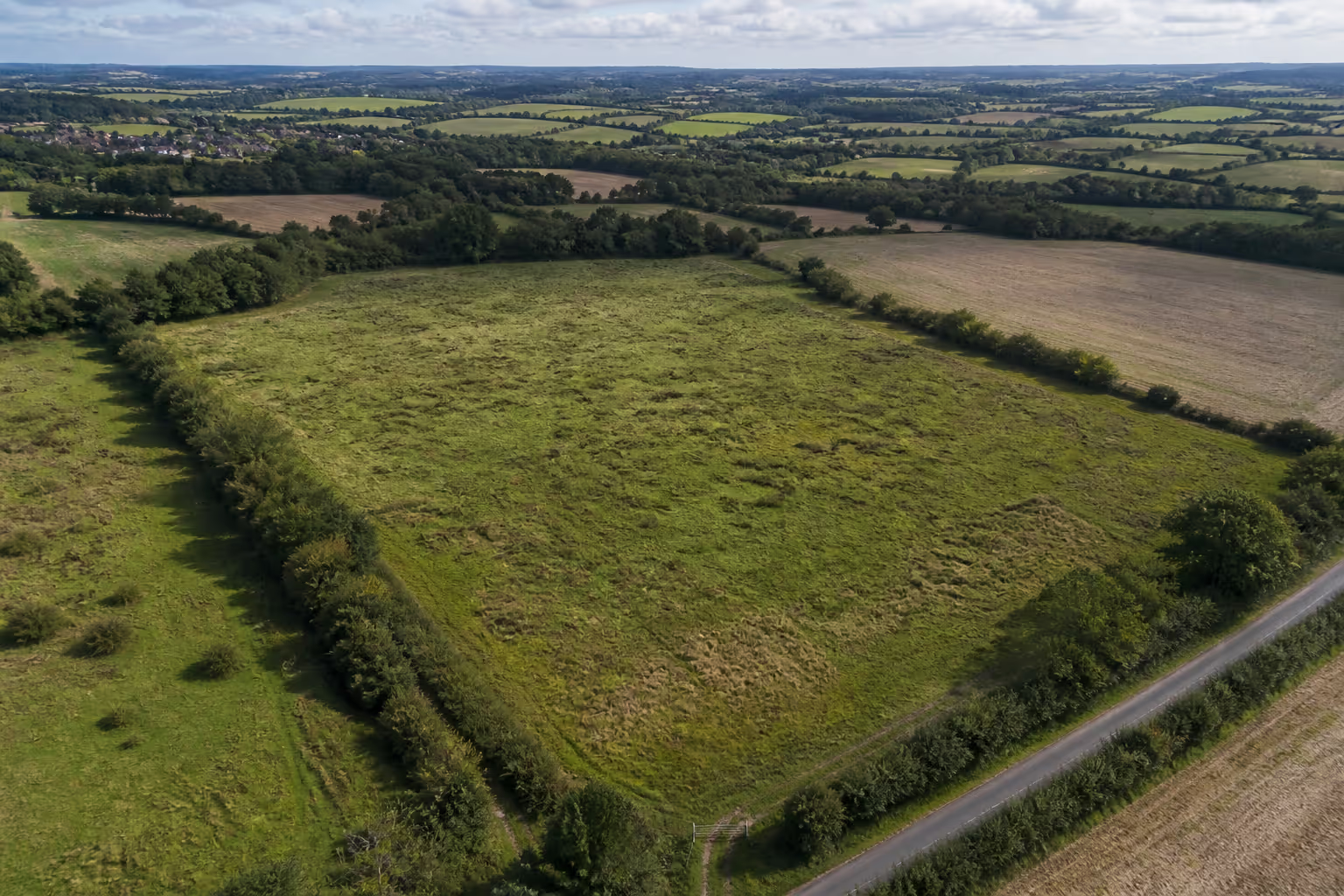
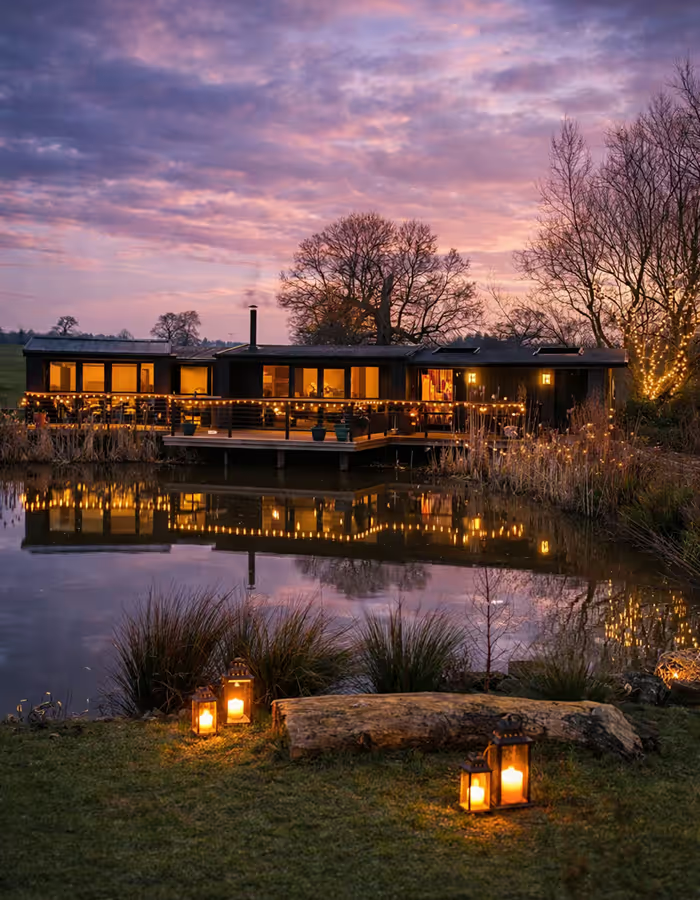
This is particularly relevant for rural development opportunities and edge-of-settlement sites, where planning justification plays a critical role.
Landowners Waiting: The Real Risk
A common approach we are seeing across the Midlands is landowners waiting for “better market conditions” before progressing sites.
The issue with this strategy is timing.
Securing planning permission in areas such as Derbyshire or Staffordshire is not immediate. Even straightforward applications can take several months, while more complex rural or countryside developments can take significantly longer.
Waiting for the market to improve before starting the planning process often results in:
- Increased competition when activity returns
- Longer determination periods due to higher submission volumes
- Reduced opportunity to maximise site value
Those who move early are the ones holding consented sites when demand returns.
That is where the real uplift in value is achieved.
Why Planning Strategy Matters More Than Ever
In the current planning climate, success is not about submitting more applications, it is about submitting the right application.
A strong planning strategy is essential, particularly for rural and high-value residential developments.
Successful schemes typically:
- Align with local planning policy and housing requirements
- Demonstrate high-quality architectural design
- Address access, landscape and environmental constraints early
- Present a clear and deliverable development proposal
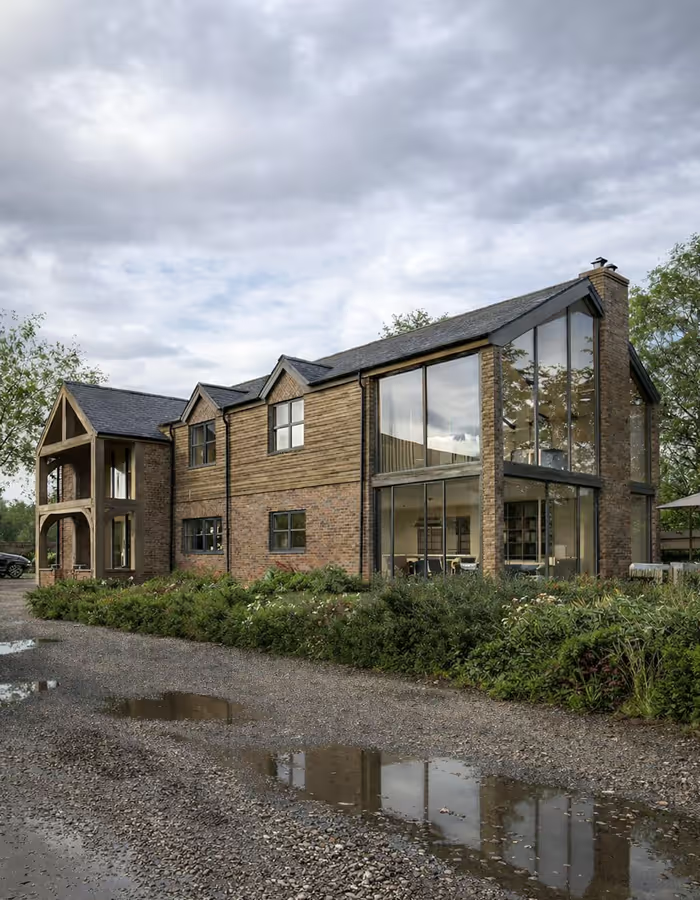
At Hawkstone Developments, we act as both architects and planning consultants, working with landowners and developers across Derbyshire, Staffordshire and Cheshire to secure planning permission and unlock the full potential of sites.
Our focus is on luxury residential architecture and rural development, where a considered approach to planning can significantly increase site value.
Why 2026 Favors Decisive Developers
While uncertainty in the planning system has slowed parts of the market, it has also created a window of opportunity.
Developers and landowners who act now are:
- Securing planning permission ahead of the next market cycle
- Reducing competition at the point of submission
- Positioning sites for maximum uplift in value
For those considering development in Derbyshire, Staffordshire or the wider Midlands, now is the time to assess site potential and establish a clear planning strategy.
At Hawkstone Developments, we regularly advise on the feasibility of sites and the most effective route to securing planning permission.
If you have a site, or are considering acquiring one, we can help you understand its potential and how best to move it forward.

.avif)
.avif)
.png)
.avif)
%20(1).avif)
.png)
.avif)
.png)

%20(1).avif)
.png)
%20(1).avif)
.png)
.jpg)
.avif)
.avif)
.avif)
.avif)