
.avif)
What is Green Belt land in the UK?
Green Belt land is designated countryside around towns and cities, intended to prevent urban sprawl and keep land permanently open.
It is one of the most misunderstood parts of the UK planning system.
Being in the Green Belt does not mean you cannot build. It means development is more restricted and must meet specific policy tests.
Around 13% of England is classified as Green Belt. This frequently affects sites across Derbyshire, Staffordshire and Cheshire, particularly:
- Land on the edge of villages
- Agricultural sites
- Farm buildings and rural plots
Understanding how policy is applied is key to unlocking any potential.
What is actually allowed in the Green Belt?
Green Belt policy does not prohibit development entirely. It restricts what is considered “inappropriate development.”
There are several forms of development that are commonly supported:
Typical allowances include:
- Agricultural buildings and farm-related development
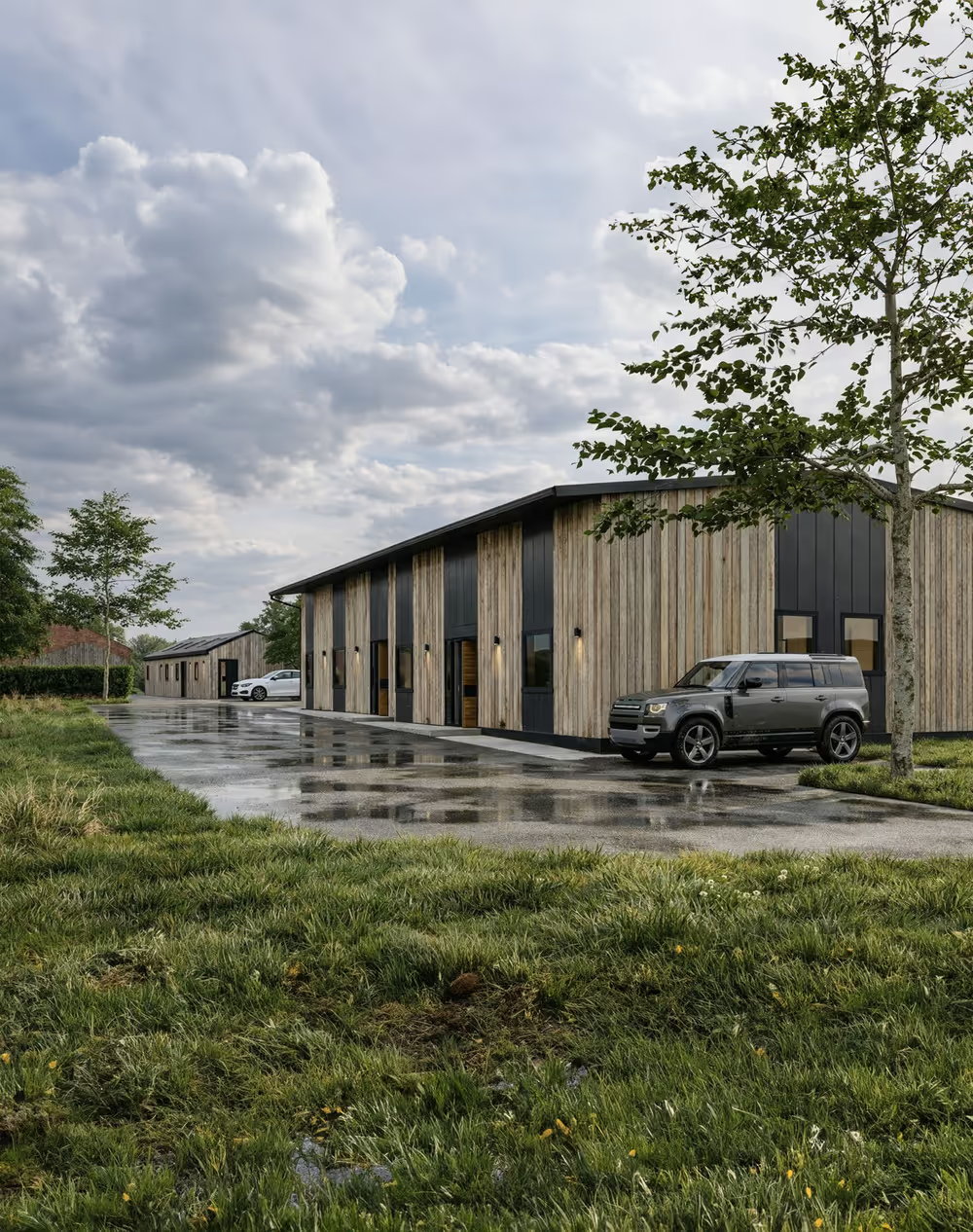
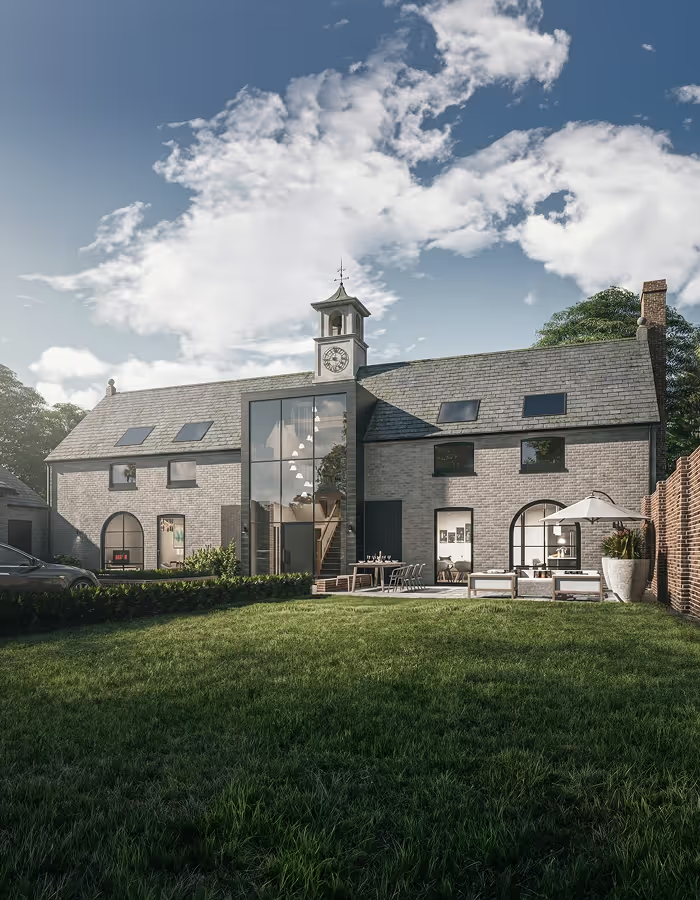
- Barn conversions under Class Q permitted development
- Extensions to existing dwellings (within proportionate limits)
- Replacement dwellings
- Limited infill within villages
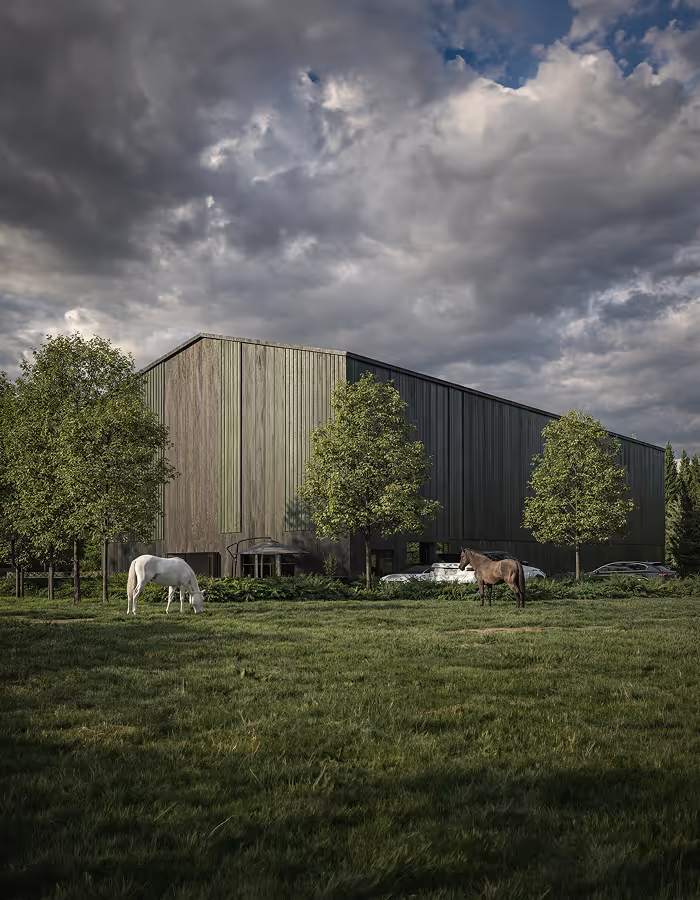
- Outdoor uses such as equestrian or recreational development
There are also more strategic routes:
- Previously developed (brownfield) land
- Paragraph 84 countryside dwellings
- Emerging “Grey Belt” opportunities
The key test is whether the proposal preserves openness and does not conflict with the purposes of the Green Belt.
What is not allowed in the Green Belt?
Most standard residential development will be considered inappropriate.
This typically includes:
- New-build houses in open countryside
- Large-scale housing developments
- Speculative proposals without policy justification
- Overly large extensions that dominate the original building
- Development that reduces openness or harms the rural setting
Unless very specific circumstances can be demonstrated, these types of proposals are unlikely to be supported.
This is why applications often fail without a clear planning strategy.
What are “very special circumstances”?
“Very special circumstances” is the main route for gaining approval for development that would otherwise be considered inappropriate.
To succeed, a proposal must clearly demonstrate that the benefits outweigh the harm to the Green Belt.
Examples may include:
- Reuse of existing structures
- Economic benefits linked to rural businesses
- Site-specific constraints or opportunities
- Wider planning benefits such as housing need
Recent updates to national policy have also introduced discussion around:
- Development in more sustainable Green Belt locations
- The concept of “Grey Belt” land, which may be more suitable for release
However, the threshold remains high, and each case is assessed on its individual merits.
Is it easier to get planning permission in the Green Belt now?
There has been some movement in policy, but Green Belt remains tightly controlled.
Recent changes to the National Planning Policy Framework have:
- Placed greater emphasis on how land functions
- Introduced discussion around Grey Belt opportunities
- Encouraged more sustainable and well-located development
However, the overall approach remains cautious.
Local authorities will still prioritise:
- Brownfield land
- Sites within settlement boundaries
If a site is remote, visually sensitive or lacks access, gaining approval will remain challenging.
If you have a site in the Green Belt, feel free to get in touch and we would be happy to discuss your options.

.avif)
.avif)
.avif)
.png)

%20(1).avif)
.png)
.png)
.jpg)
%20(1).avif)
.png)
.avif)
%20(1).avif)
.avif)
.png)
.avif)
.avif)