
Should You Renovate or Start Again?
One of the most common questions homeowners ask when improving a property is simple: should I renovate my house or knock it down and rebuild?
The answer depends on several factors including:
- The structural condition of the property
- The layout and ceiling heights
- Planning constraints
- Build costs versus end value
- Energy efficiency potential
- Site location and surrounding property values
In many cases, homeowners initially assume a renovation will be cheaper. However, once structural works, extensions, insulation upgrades, roof alterations and layout changes are added together, the costs can quickly approach, or even exceed, the price of a complete replacement dwelling.
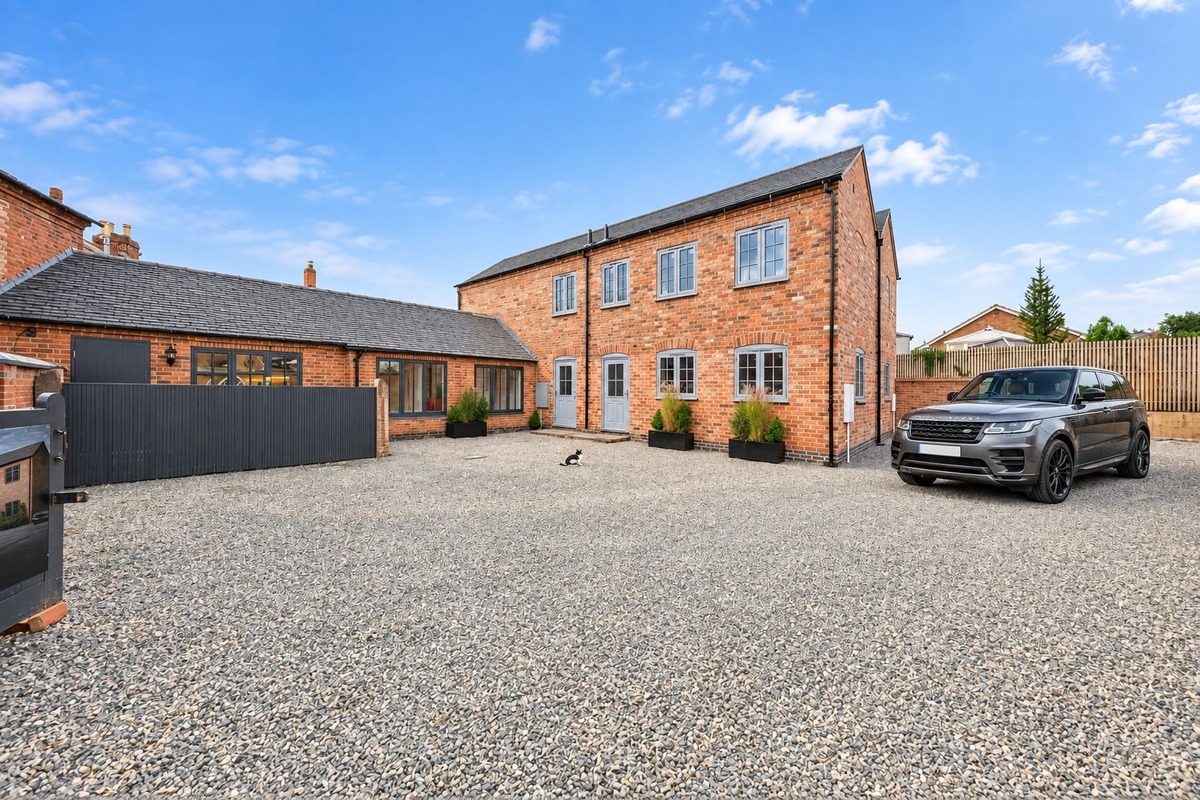
Across Derbyshire, Staffordshire and Cheshire, we are increasingly seeing homeowners choose to demolish outdated properties and create entirely new bespoke homes designed around modern living. This is particularly common in rural locations, Green Belt plots and larger countryside sites where the land value significantly outweighs the value of the original house.
At Hawkstone Developments, we regularly help clients assess both options before committing to a route, ensuring the decision is financially and strategically sound from the outset.
When Renovating Makes More Sense
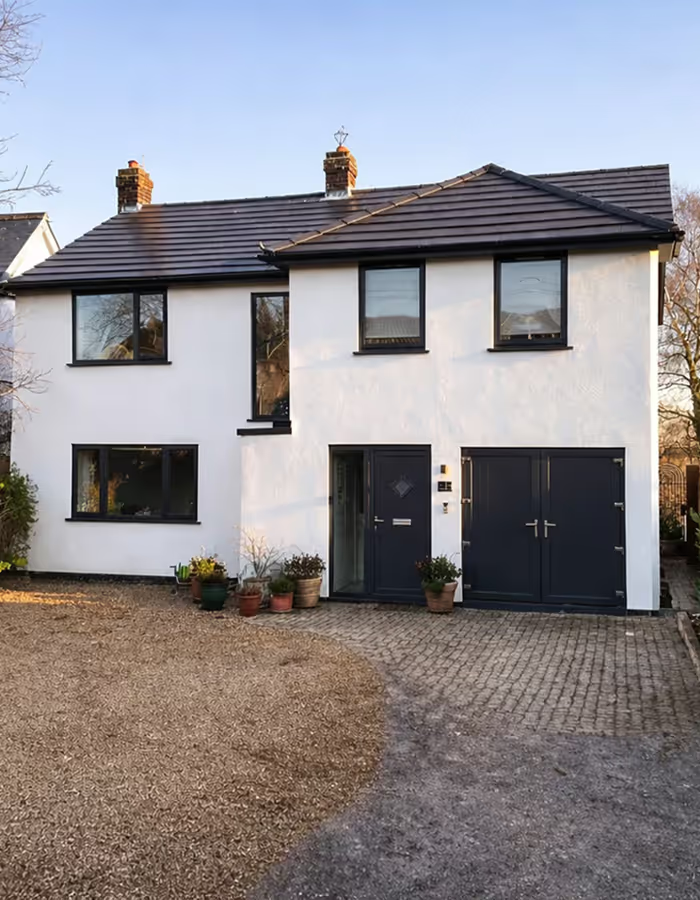
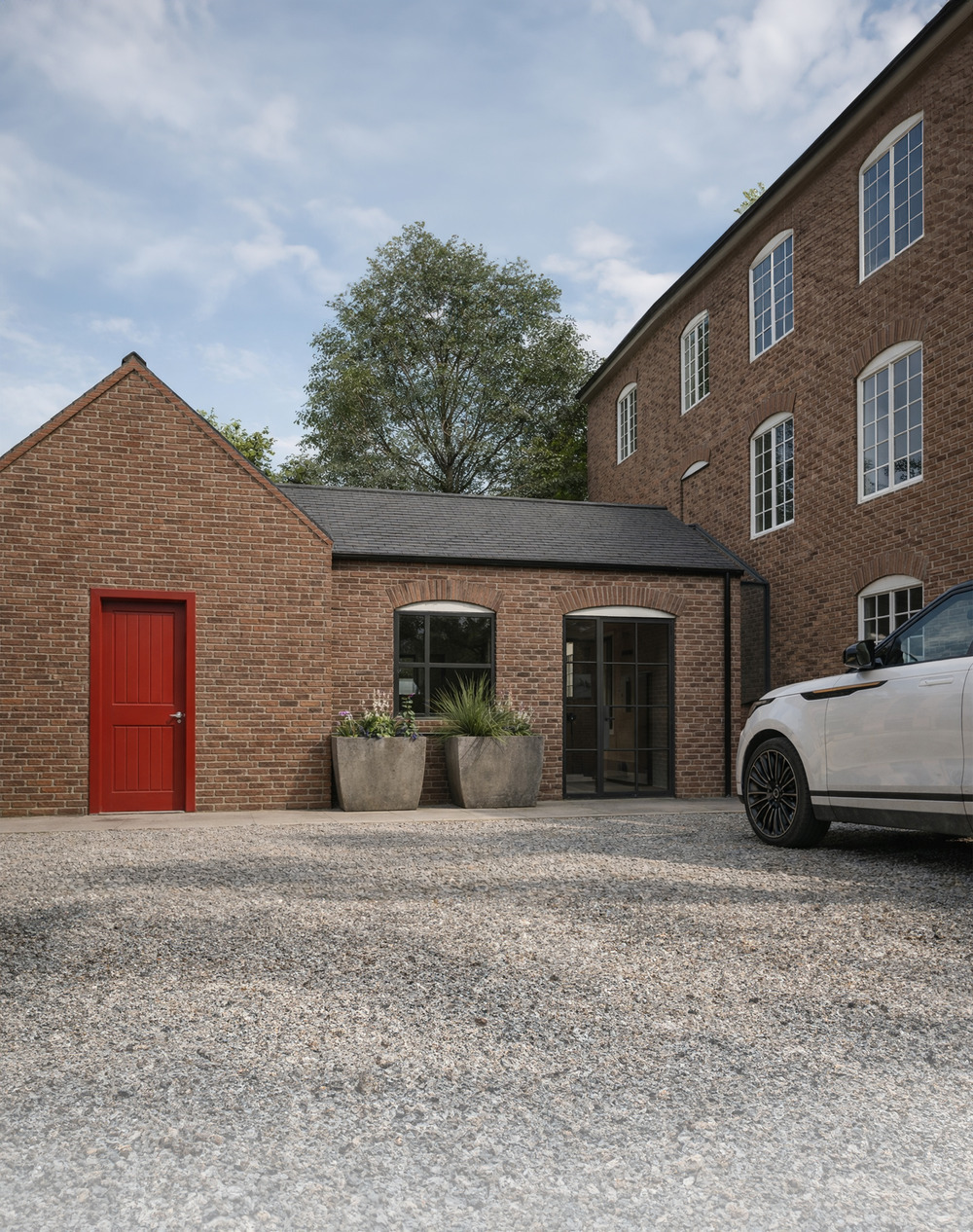
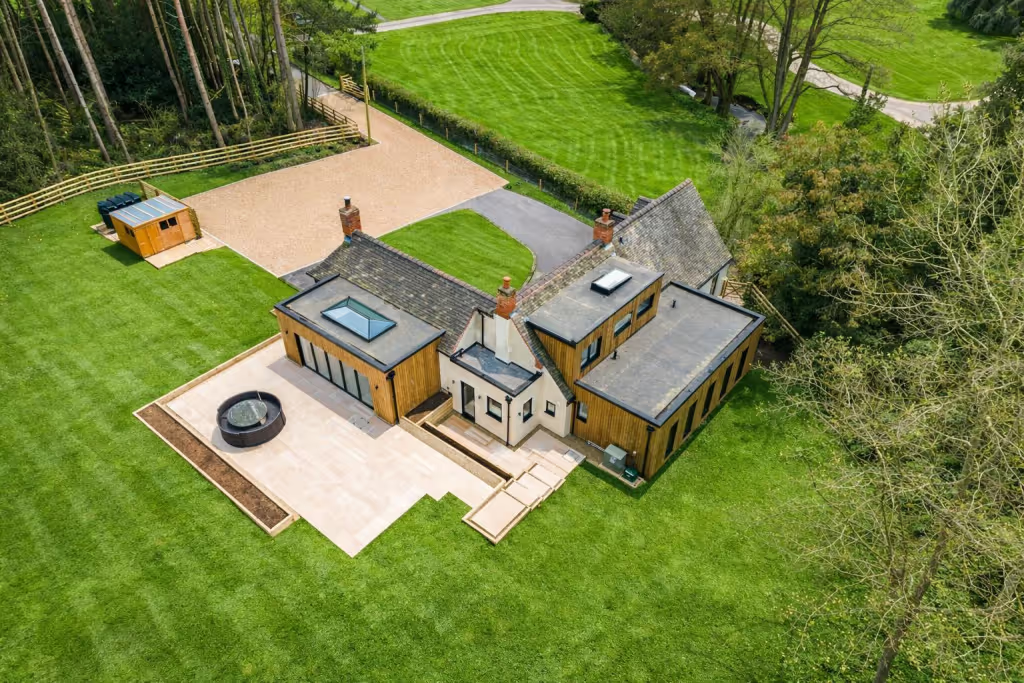
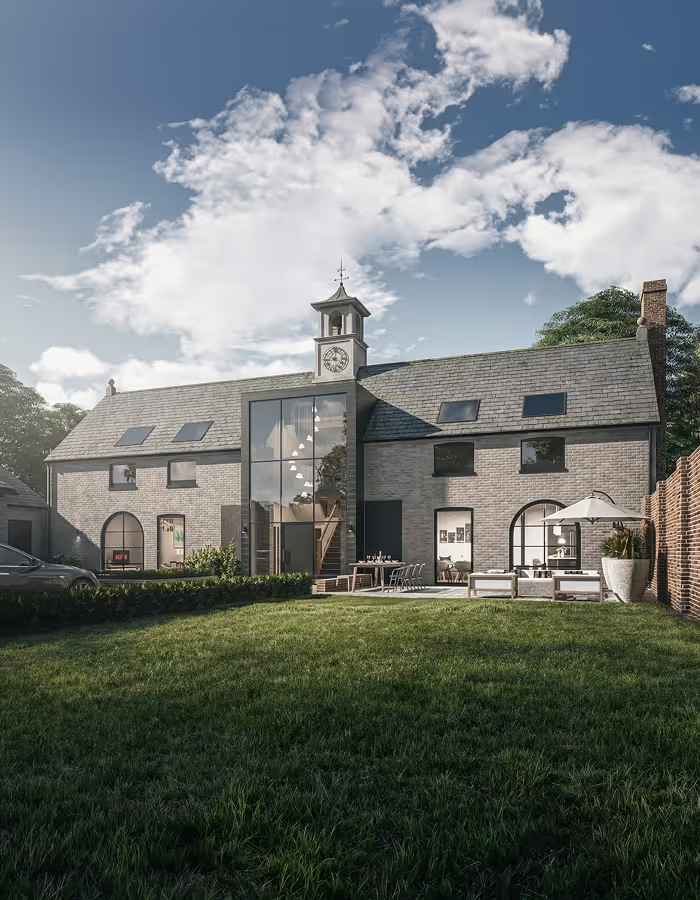
Renovating an existing property is often the best option where the building already has strong architectural character, a good structure or planning limitations that restrict redevelopment.
Renovation projects can work particularly well when:
- The existing footprint already functions well
- The structure is in good condition
- The property has heritage value or local character
- Planning policy is restrictive towards replacement dwellings
- You only require additional space through extensions or reconfiguration
- The property is located within a conservation area or sensitive countryside setting
A well-designed renovation can dramatically improve:
- Natural light
- Internal flow and layout
- Energy efficiency
- Kerb appeal
- Property value
In areas such as the Peak District, conservation villages or rural Staffordshire, retaining and upgrading an existing property can often be more favourable from a planning perspective than pursuing a complete replacement dwelling.
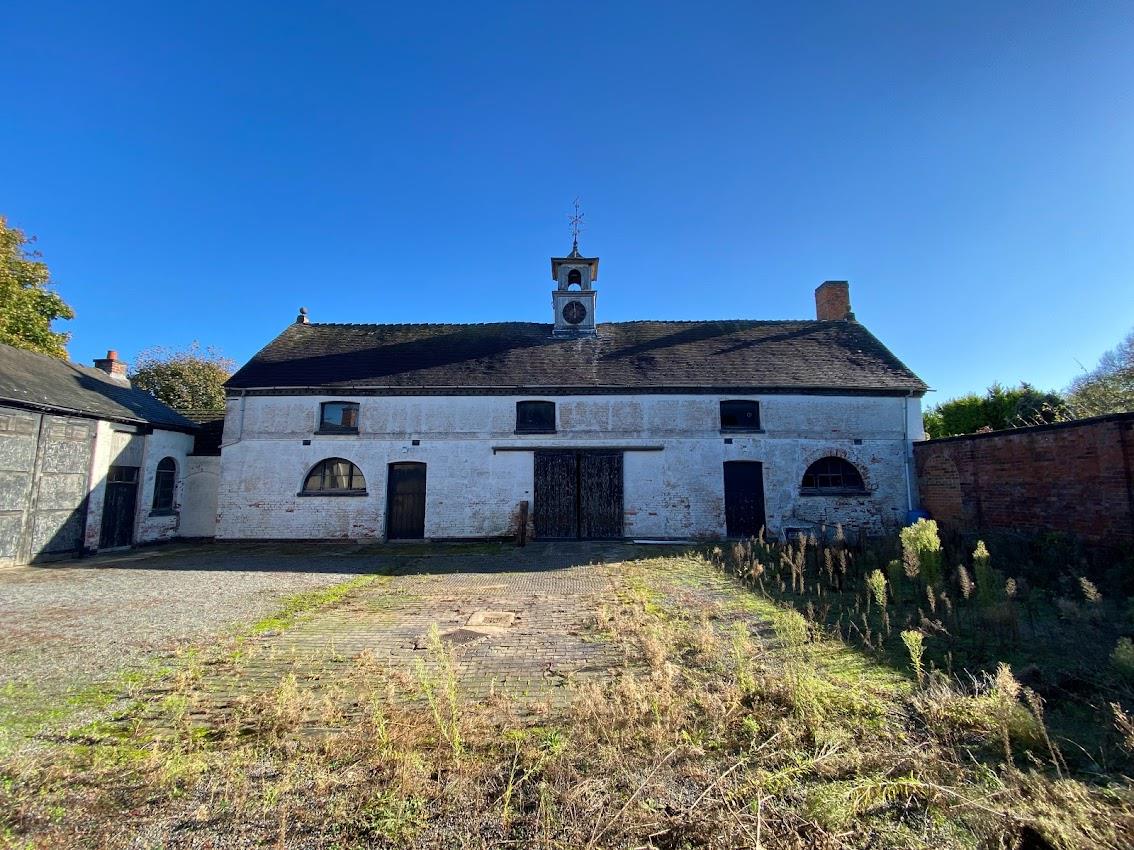
However, renovation projects can also uncover hidden costs. Structural movement, outdated drainage, poor insulation, asbestos, roof defects and complex structural alterations can quickly increase budgets beyond initial expectations.
Understanding the existing building thoroughly before committing is essential.
When Knocking Down and Rebuilding is the Better Option
In some cases, a complete replacement dwelling offers far greater long-term value than attempting to modernise an outdated property.
This is particularly true where:
- The existing house is structurally poor
- Ceiling heights are low
- The layout is heavily compromised
- The property lacks architectural quality
- Large extensions would still fail to create a cohesive home
- Energy efficiency upgrades would be extensive and expensive
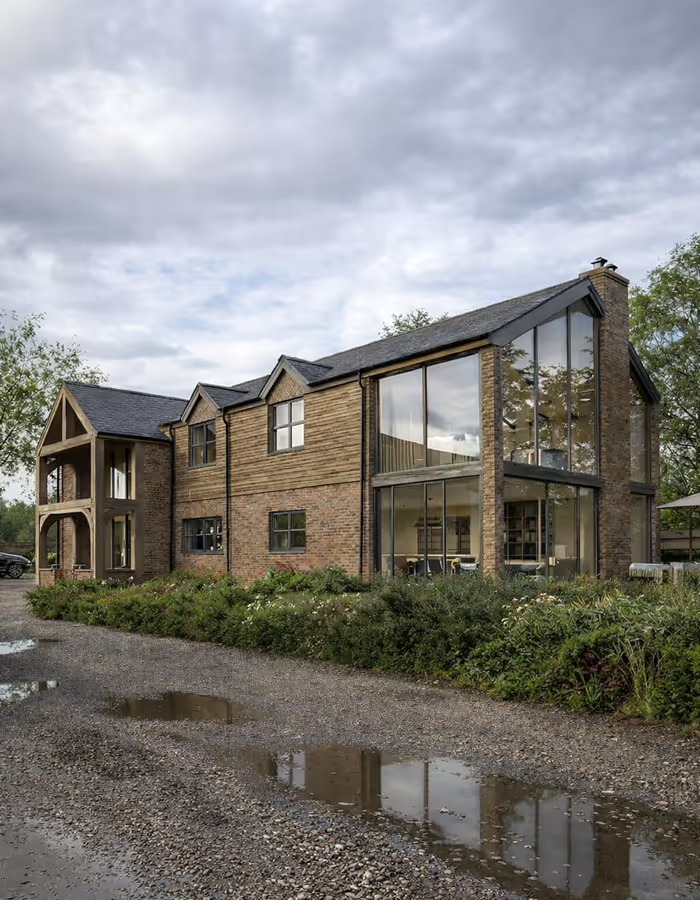
A new build allows complete design freedom from the outset. Rather than working around existing structural constraints, the house can be designed entirely around:
- Modern family living
- Open-plan spaces
- Large glazing and views
- Energy performance
- Future-proofing
- Indoor-outdoor living
- Site orientation and landscape integration
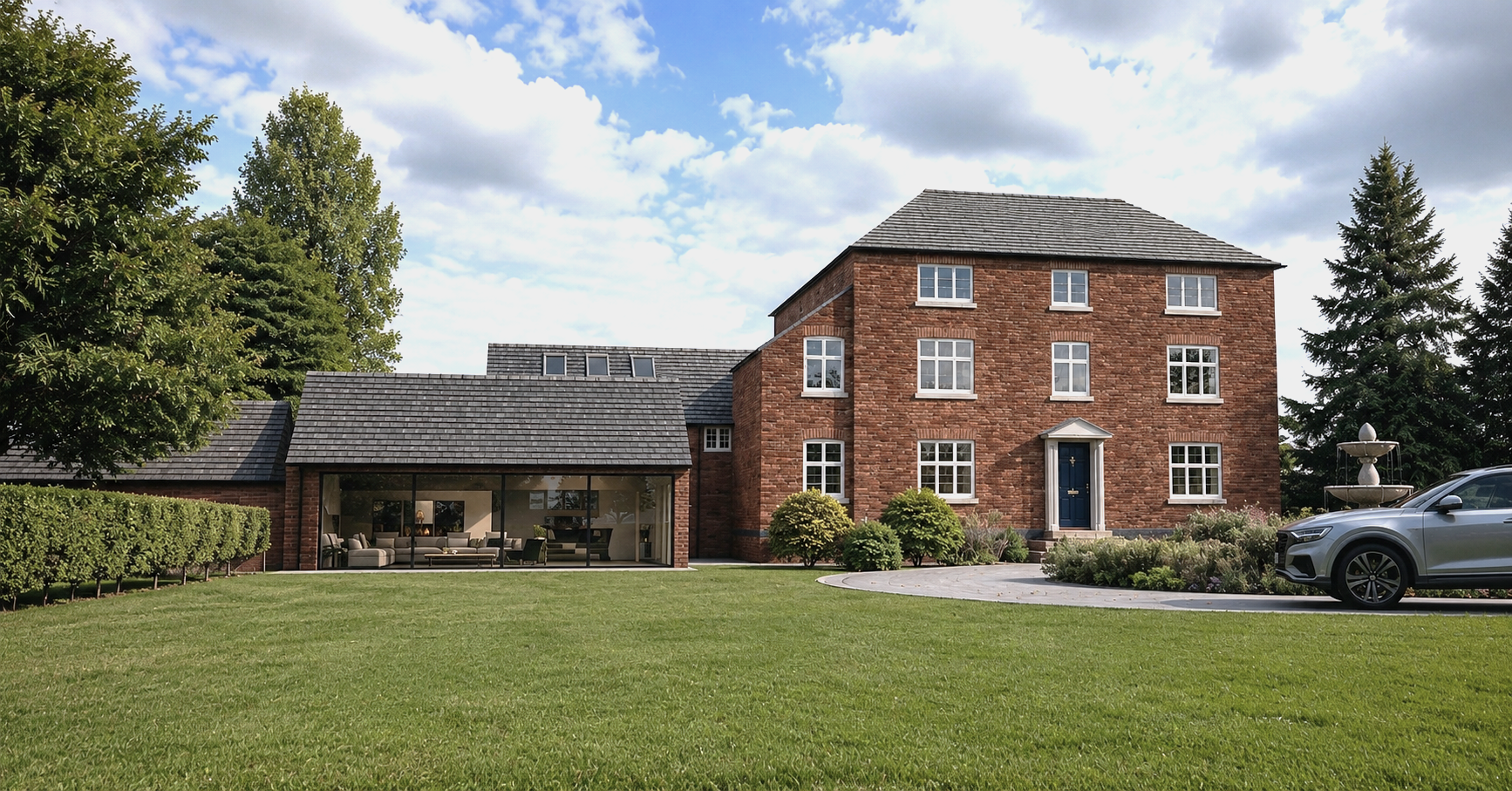
Replacement dwellings also often perform significantly better financially in high-value locations. On premium plots across Cheshire, Derbyshire and Staffordshire, the uplift created by a well-designed bespoke home can substantially outweigh the additional build costs.
Many older properties were simply never designed for modern expectations. Trying to retrofit them into luxury contemporary homes can become inefficient both practically and financially.
A carefully designed replacement dwelling can also significantly reduce long-term maintenance and operational costs through modern construction methods and improved energy performance.
Planning Permission Considerations
Planning permission plays a major role in determining whether renovation or redevelopment is the best route.
Replacement dwellings are generally considered more favourably where:
- The existing dwelling is lawful and established
- The replacement is proportionate in scale
- The proposal enhances the character of the site
- The design responds sensitively to the landscape
- The development improves visual quality
However, planning becomes more complex in:
- Green Belt locations
- Conservation Areas
- National Landscapes (AONB)
- The Peak District National Park
- Heritage-sensitive settings
- Isolated countryside sites
In these locations, the scale, massing and design approach become critical.
Many councils now place significant emphasis on high-quality architecture and landscape integration, particularly for replacement dwellings in rural settings. Poorly designed oversized proposals are often resisted, whereas carefully considered contemporary architecture can sometimes gain strong planning support.
A feasibility study before purchase or commitment is therefore essential.
At Hawkstone Developments, we regularly advise homeowners on whether their property is better suited to renovation, extension or complete redevelopment based on planning policy, site constraints and long-term value potential.
Speak to Hawkstone Developments
At Hawkstone Developments, we specialise in luxury residential architecture, countryside homes and bespoke redevelopment projects across Derbyshire, Staffordshire and Cheshire.
We help homeowners assess whether renovation, extension or complete redevelopment is the right approach for both the property and the long-term investment potential of the site.
Our services include:
- Feasibility studies
- Planning strategy
- Concept design
- Replacement dwelling applications
- Luxury home design
- 3D visualisation and CGI
- Rural and Green Belt planning advice
If you are considering transforming your property and want honest, strategic advice before committing to a direction, feel free to get in touch with our team.

.avif)
.avif)
%20(1).avif)
.avif)
%20(1).avif)
.png)
.jpg)
.png)

.avif)
.avif)
.png)
%20(1).avif)
.png)
.avif)
.avif)
.avif)