

What Is Planning Permission?
Planning permission is the formal approval granted by a Local Planning Authority allowing development to take place on a site. While many people assume there is only one type of planning application, there are actually several different routes available depending on the nature of the proposal.
Whether you are extending your home, converting a barn, developing land or altering a listed building, understanding which application type applies to your project can save considerable time and expense.
In this guide we explain the most common forms of planning permission and when each is typically used.
Householder Planning Permission
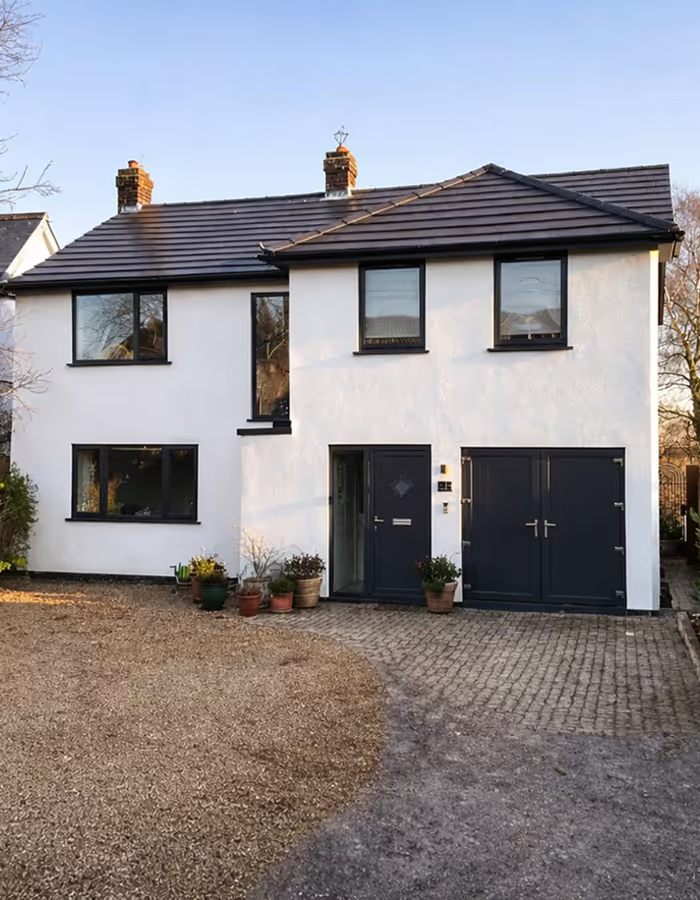
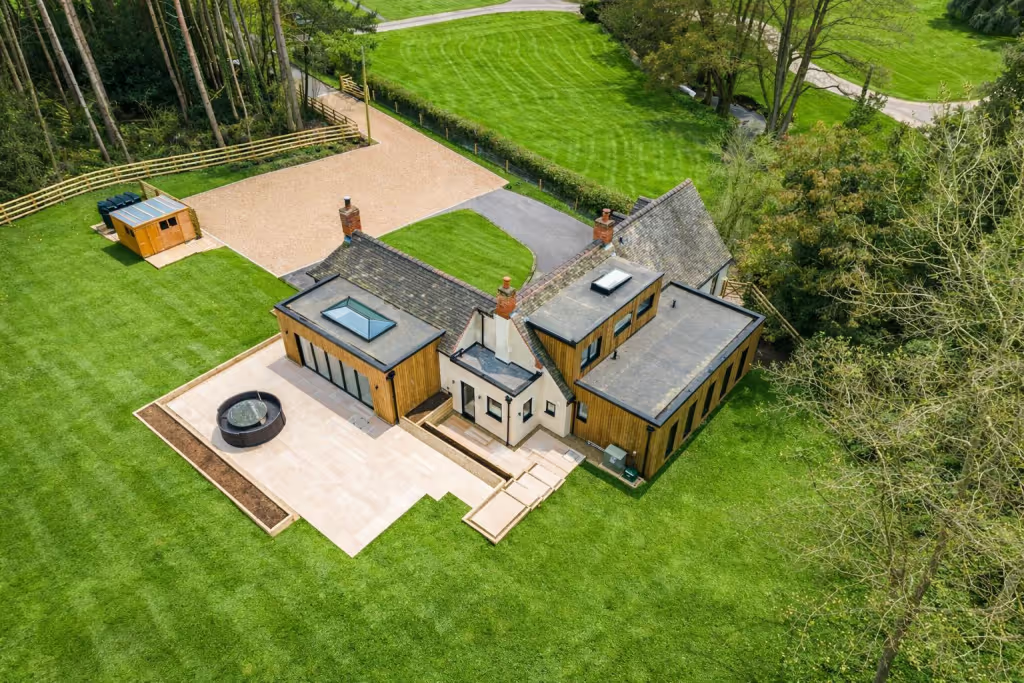
Householder applications are the most common type of planning application submitted by homeowners.
They are generally required for:
- House extensions
- Loft conversions
- Detached garages
- Garden rooms
- Alterations to windows and doors
- Changes to the appearance of a property
Not all domestic projects require planning permission. Some works may fall under Permitted Development Rights, although restrictions can apply to listed buildings, conservation areas and certain rural properties.
A householder application is typically determined within eight weeks and requires detailed drawings showing both the existing and proposed arrangements.
Full Planning Permission
Full Planning Permission is generally required for larger or more complex developments where all details of the proposal are known at the time of submission.
Examples include:
- New build dwellings
- Commercial developments
- Residential schemes
- Changes of use
- Major extensions
A Full Planning application contains detailed information regarding the proposed design, layout, scale, access arrangements and appearance of the development.
This route provides certainty once approved, as all principal aspects of the proposal have already been assessed by the Local Planning Authority.
Outline Planning Permission and Reserved Matters
Outline Planning Permission allows applicants to establish whether the principle of development is acceptable before investing in a detailed design.
This route is commonly used for:
- Housing developments
- Development land
- Larger residential schemes
- Sites being marketed for sale
Following approval of an Outline application, a Reserved Matters application is normally required to approve details such as:
- Appearance
- Access
- Landscaping
- Layout
- Scale
This two-stage process can reduce upfront costs and planning risk, particularly on larger sites.
Prior Approval, Listed Building Consent and Other Application Types
Prior Approval applications are commonly associated with Permitted Development Rights and are frequently used for:
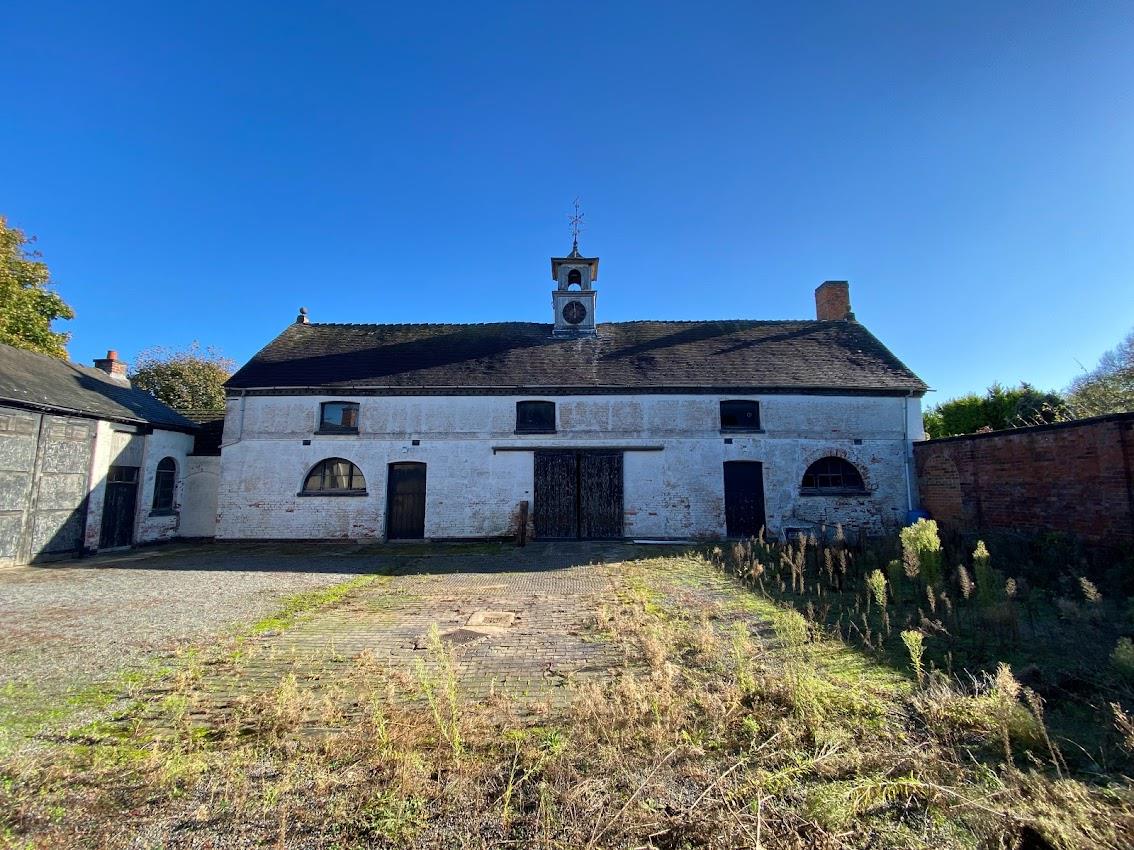
- Class Q barn conversions
- Agricultural development
- Telecommunications equipment
- Changes of use
Although full planning permission is not required, the Local Planning Authority will still assess specific matters before approval is granted.
Listed Building Consent
Works affecting a listed building often require Listed Building Consent in addition to planning permission. This applies to both internal and external alterations that may affect the building's historic character.
Lawful Development Certificates
A Lawful Development Certificate can be used to confirm that proposed works do not require planning permission or that an existing use is lawful.
Permission in Principle
Permission in Principle is a simplified route designed to establish whether residential development is acceptable on a site before progressing to detailed design work.
Choosing the correct planning route is one of the most important early decisions in any development project. The application process, supporting information and timescales can vary significantly depending on the type of permission required.
At Hawkstone Developments, we regularly advise homeowners, landowners and developers on the most appropriate planning strategy for their projects throughout Derbyshire, Staffordshire, Cheshire and the surrounding areas. If you are unsure which application route applies to your proposal, our team can provide clear advice before you commit to a formal submission.

.jpg)
.avif)
%20(1).avif)
.avif)
.png)
.png)
.avif)
.png)
.png)
.png)
.avif)
.avif)
.avif)
.avif)

%20(1).avif)
%20(1).avif)
.avif)